
Appleton’s humid continental climate brings cold winters that cause grease to solidify faster inside traps, especially in older commercial buildings around Downtown and the North Side. Restaurants near the Fox Cities Performing Arts Center and Lawrence University often run high-volume fryers and dishwashers that push more fats into lines already strained by decades-old cast iron or clay pipe common in Outagamie County. Regular pumping prevents backups that can send odors into dining rooms or force temporary closures during peak summer tourism from Green Bay and Oshkosh visitors.
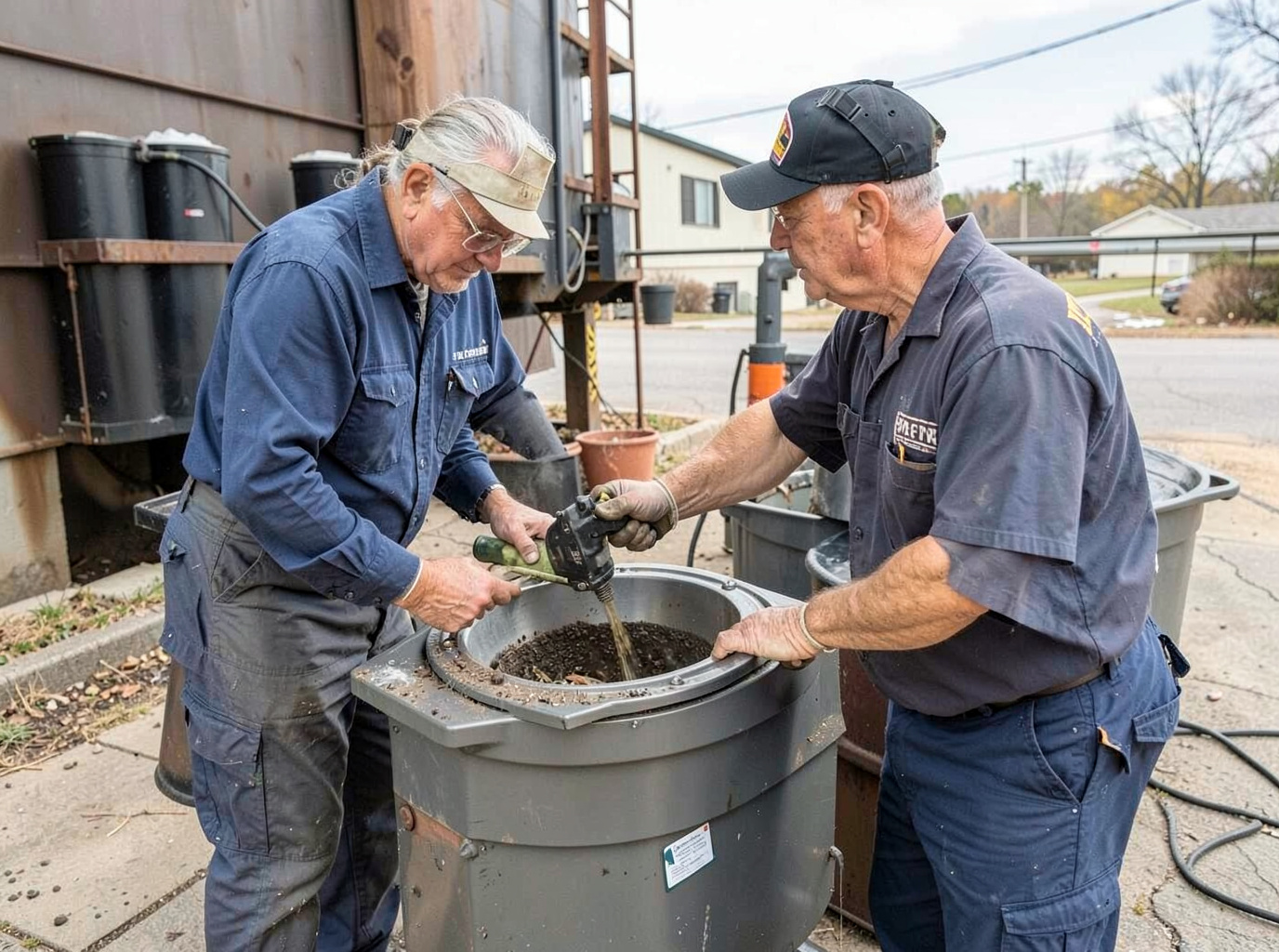
Technicians at Drainly Pro locate traps by tracing waste lines from the kitchen, then remove lids without damaging surrounding concrete or tile. They pump solids and liquids, scrape walls to remove baked-on layers, and flush lines with low-pressure water to clear any remaining sludge before reinstalling the lid with new gaskets. In winter months, crews warm the trap exterior first so thick grease does not fracture piping during extraction.
Homeowners on the North Side with older two-story houses sometimes install small residential grease traps after repeated sink clogs. These units fill quicker than expected when cooking oils mix with cold groundwater infiltration common in the area. Cleaning intervals shorten to every four to six weeks instead of the quarterly schedule used by most commercial kitchens.
Technician insight
In Appleton the thing that catches most people out with Grease Trap Cleaning is how quickly grease hardens once winter temperatures drop below freezing. North Side homes with older clay lines see backups sooner because cold groundwater keeps the grease from flowing toward the main. Checking the trap before the first hard freeze saves a lot of emergency calls from kitchens near the Fox Cities Performing Arts Center.
Overflowing Trap Near Lawrence University
A small restaurant on the edge of campus called after a Friday lunch rush left standing water in the dish pit. The trap had not been pumped since early fall and the sudden cold snap had turned the grease into a solid plug. We pumped the unit, jetted the short run to the street main, and reset the schedule for every six weeks through winter.
Grease Trap Cleaning Services We Offer
✓Commercial Kitchen Grease Trap Cleaning
Full pumping and scraping of under-sink and in-floor traps in restaurants near Downtown Appleton to keep lines clear during busy seasons.
✓Residential Grease Trap Service
Cleaning and inspection of smaller home grease interceptors on the North Side where older plumbing mixes cooking waste with cold-weather flow restrictions.
✓High-Volume Fryer Trap Maintenance
Targeted service for traps serving multiple fryers in kitchens near Lawrence University and the Fox Cities Performing Arts Center.
✓Emergency Grease Trap Pumping
Same-day response for overflowing traps that threaten to back up into kitchens or basements during sudden cold snaps.
✓Line Jetting After Trap Cleaning
Hydro jetting of downstream drain lines to remove residual grease pushed toward main sewer connections in Outagamie County soil conditions.
Grease Trap Cleaning Cost in WI
| Service | Typical Range | What Affects It |
|---|---|---|
| Standard Commercial Trap Pumping | $225–$375 | Varies by trap capacity and location in Downtown or North Side buildings. |
| Residential Trap Cleaning | $175–$275 | Smaller units common in older North Side homes. |
| Add-On Line Jetting | $150–$250 | Required when grease has migrated past the trap in cold weather. |
| Emergency After-Hours Service | $300–$450 | Available outside Mon–Fri 8am–6pm and Sat 9am–2pm windows. |
Ranges are typical for WI and confirmed with an exact written quote before any work starts.
How it works
- 1
Site Assessment
Technician arrives at the Appleton address, locates the trap, and checks access lids and surrounding surfaces for damage risk.
- 2
Pumping and Removal
Liquids and solids are pumped into the service truck, then walls are scraped to clear hardened layers left by cold winter grease.
- 3
Line Flush and Inspection
Downstream pipes are flushed and checked for remaining buildup before the trap is resealed and the area restored.
- 4
Documentation and Schedule
Owner receives a written report noting trap condition and recommended next service interval based on local usage patterns.
Pricing
Upfront quotes based on trap size, access difficulty, and whether jetting is required.